A flue is the inner channel of the chimney, usually a stack of clay tiles inside older Norwalk masonry, or a metal pipe in newer homes. When people say "i got my flue clogged," the blockage is usually one of four…
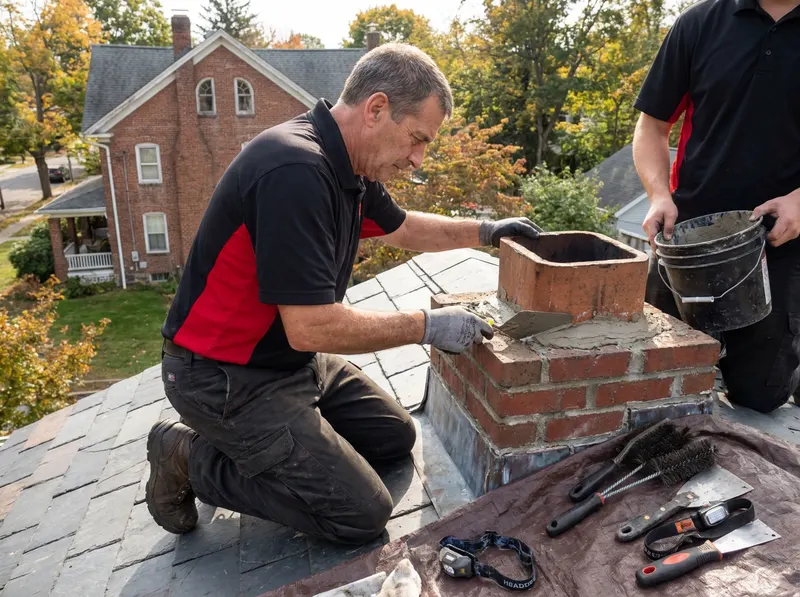
A flue is the inner channel of the chimney, usually a stack of clay tiles inside older Norwalk masonry, or a metal pipe in newer homes. When people say "i got my flue clogged," the blockage is usually one of four things: a heavy creosote glaze from years without a sweep, a bird or squirrel nest above the smoke chamber, fallen tile shards, or leaves packed at the cap. A blocked flue is the direct cause of smoke backdraft into the room and, in a gas or oil setup, of carbon monoxide pushing back inside. Clogged flue repair begins by identifying which of those it is on camera, because clearing a nest and clearing a creosote glaze are two different jobs at two different prices. Routine flue cleaning removes the buildup; if the camera shows cracked or spalled tile behind it, the fix moves to relining rather than more scrubbing.
Chimney relining installs a new liner inside the old chimney. The common choice is a UL-listed stainless-steel chimney flue liner sized to the appliance, CSIA and NFPA 211 both require the liner cross-section to match the flue outlet, since an oversized liner cools smoke too fast and worsens creosote. Stainless is the fit for an oil or wood system in a Silvermine or West Norwalk home with cracked clay tile. A cast-in-place ceramic liner suits an older SoNo or East Norwalk masonry stack where the tile is crumbling but the brick shell is sound and you want to rebuild the interior surface. The trade-off is straightforward: stainless is faster and lower cost, cast-in-place is a longer install but restores a full-length smooth passage in a chimney with offsets. A Level 2 inspection, the standard triggered by a sale, a chimney fire, or a system change, is what confirms which one your chimney can actually take.
Sealing a flue is the other request: "i want to seal it off." This applies when a Rowayton or Cranbury homeowner has switched to a gas furnace, capped a fireplace they never use, or abandoned a second flue in a shared masonry chimney. A proper seal-off is not a bag stuffed in the throat. It means a code-compliant top-plate and cap at the crown plus a block-off at the smoke chamber, so rain, animals, and cold air stop entering the unused flue while any active flue beside it keeps drafting. In shared Broad River and Golden Hill chimneys with two or three flues in one stack, each flue is sealed or kept live independently, the camera confirms which is which before anything is closed. "Is this a chimney company", yes; the inspection is camera-documented and the quote is flat and written before work starts, so you see the flue condition on video rather than taking a verbal description on faith.
Edge cases worth knowing: a flue that fails a smoke test but has intact tile may only need repointing at the joints, not a full reline. A flue in a home built before roughly 1950 in Wolfpit or Brookside may have no liner at all, which NFPA 211 flags as unsafe to use until relined. And a clog paired with a strong tar odor usually signals third-degree creosote, which is removed mechanically or chemically, not with a standard brush. The free on-site estimate covers all three findings so the recommendation matches what the camera shows.
Every job gets a firm, written price after a free on-site visit.
Tell us about your flue repair & sealing job in Norwalk and we'll send a clear, written quote, usually the same day.
 Sootpro Chimney Sweep