Chimneys are the most common raccoon den site in Fairfield County during spring, because an uncapped flue mimics a hollow tree. In Norwalk the calls cluster in two seasons: spring, when raccoons and chimney swifts nest…
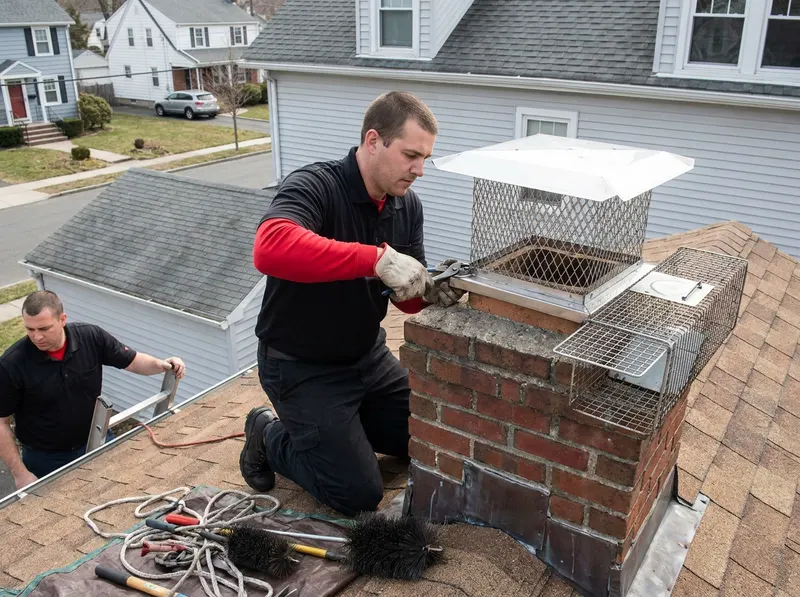
Chimneys are the most common raccoon den site in Fairfield County during spring, because an uncapped flue mimics a hollow tree. In Norwalk the calls cluster in two seasons: spring, when raccoons and chimney swifts nest inside the smoke chamber, and fall, when homeowners in Rowayton and Silvermine try their first fire and smell the debris left behind. Chimney swifts are federally protected under the Migratory Bird Treaty Act, so an active swift nest with young cannot legally be removed until the birds fledge, the correct fix is a cap installed after the season ends.
The work runs in a set order. First, a camera drops into the flue to see what is inside and whether a nest is active. Second, the animal is removed by hand or the nest and material are pulled out. Third, the flue and smoke chamber are cleaned out of droppings, sticks, and creosote loosened during removal. Fourth, a 316 stainless mesh chimney cap is fitted to the flue tile or liner. This sequence matches the CSIA cleaning standard and a Level 1 inspection under NFPA 211, which checks readily accessible portions of the flue after any obstruction is cleared. If the removal exposes cracked tile or a damaged liner, a Level 2 inspection with full camera scan is the next step before lighting a fire.
The cap material matters. Galvanized or aluminum caps corrode within a few Norwalk winters of salt air off Norwalk Harbor and Calf Pasture Beach; 316 stainless mesh resists that salt corrosion and holds its shape against a determined raccoon. A custom chimney animal guard is sized to the exact crown or flue rather than a one-size clamp-on, which matters on the older brick chimneys common in East Norwalk, South Norwalk (SoNo), and Golden Hill where flue tiles vary. Standard spark-arrestor mesh spacing is 3/4 inch, small enough to stop birds, squirrels, and embers while still drafting properly.
Deciding between options is straightforward. A one-time nest removal with no cap suits a rental or a chimney slated for a full rebuild, it clears the blockage but leaves the top open, so animals return within a season. A removal plus a standard stainless cap fits most single-family homes in West Norwalk, Cranbury, Broad River, Wolfpit, and Brookside. A custom stainless guard fits oversized crowns, multiple flues sharing one chimney, or historic masonry where a stock cap will not seal. The trade-off is cost against permanence: the bare removal is cheapest today but recurs, while the 316 stainless cap costs more upfront and keeps the raccoons out for years.
A free on-site estimate confirms the flue size, cap type, and total before any work begins. Homeowners comparing sweeps are welcome to get some quotes; the camera footage from the inspection shows exactly what is inside the chimney rather than a verbal 'we'll take a look.' Phone or text (475) 387-3942 to reach the shop.
Every job gets a firm, written price after a free on-site visit.
Tell us about your animal removal & spark arrestor job in Norwalk and we'll send a clear, written quote, usually the same day.
 Sootpro Chimney Sweep