A chimney cap is the metal hood over the top of the flue, and a chimney crown is the sloped concrete or mortar slab around the flue tile that the cap often mounts to. Wind is the most common reason a cap fails in…
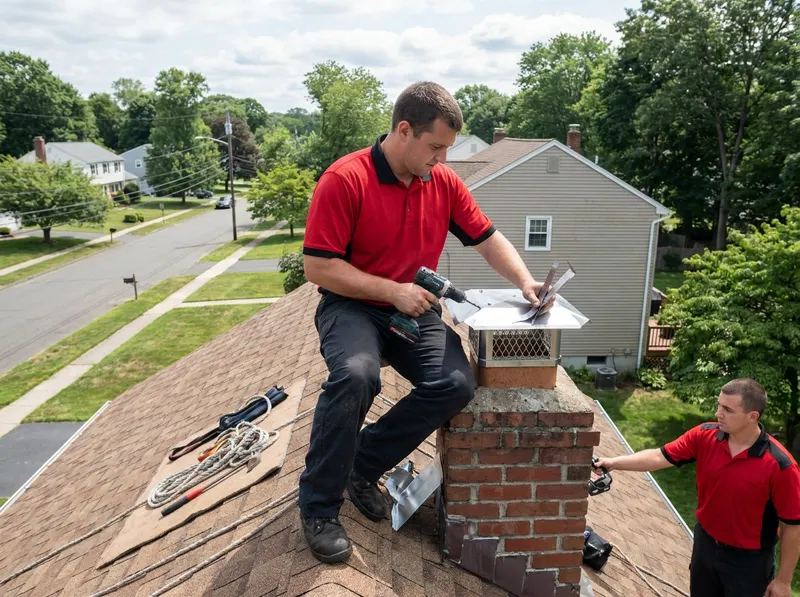
A chimney cap is the metal hood over the top of the flue, and a chimney crown is the sloped concrete or mortar slab around the flue tile that the cap often mounts to. Wind is the most common reason a cap fails in Norwalk. Homes on the exposed shoreline in Rowayton, East Norwalk, and near Calf Pasture Beach take the brunt of nor'easters coming off Norwalk Harbor, and a strong gust can lift or blow a chimney cap back off the crown, especially older single-flue caps held by only a few set screws. When someone says a storm blew the cap back from the chimney, the fix is usually a reattach: the existing cap is inspected for dents and rust, straightened if needed, and re-secured with new stainless fasteners.
Deciding between reattach, repair, and full replacement comes down to the metal and the crown underneath. If the cap is stainless steel and structurally sound, reattaching it is the least expensive path and often done the same visit. If the cap is galvanized steel that has rusted through, or the mesh spark screen is torn, replacement makes more sense because a rusted cap will keep failing. Stainless steel and copper caps resist coastal salt air far better than galvanized, which matters for homes in Silvermine, Cranbury, and Broad River near the water. The trade-off is upfront cost: a galvanized cap is cheaper today, but stainless typically outlasts it by many years in Fairfield County's damp, salty conditions.
A damaged cap is often a symptom, not the whole problem. When the crown beneath the cap is cracked, water runs down into the chimney and rusts the next cap from the inside, so chimney crown repair frequently goes hand in hand with a cap replacement. Small hairline cracks in the crown can be sealed with a flexible crown coating; wide cracks or spalled concrete need the crown rebuilt. A Level 1 inspection under CSIA and NFPA 211 guidelines checks the readily accessible parts of the chimney, including the cap and crown, and a camera scan documents what is found so the quote reflects actual condition rather than a vague estimate.
Before any work, the process is simple: (1) call or text a photo of the cap, (2) a technician comes out for a free on-site estimate and checks the cap, crown, and flue, (3) the findings and a flat written price are reviewed before anything is fixed, and (4) the reattachment or replacement is scheduled. If a cap blew off entirely and left the flue open, covering the flue promptly keeps rain and animals out until the new cap is installed. Multi-flue chimneys, common on larger homes in West Norwalk and Golden Hill, sometimes need a custom-fabricated cap sized to the crown, which adds lead time for the part.
Every job gets a firm, written price after a free on-site visit.
Tell us about your chimney cap repair & replacement job in Norwalk and we'll send a clear, written quote, usually the same day.
 Sootpro Chimney Sweep